Preah Khan, Angkor
A vast, half-collapsed monastic city north of Angkor Thom, quieter than any temple of its size.
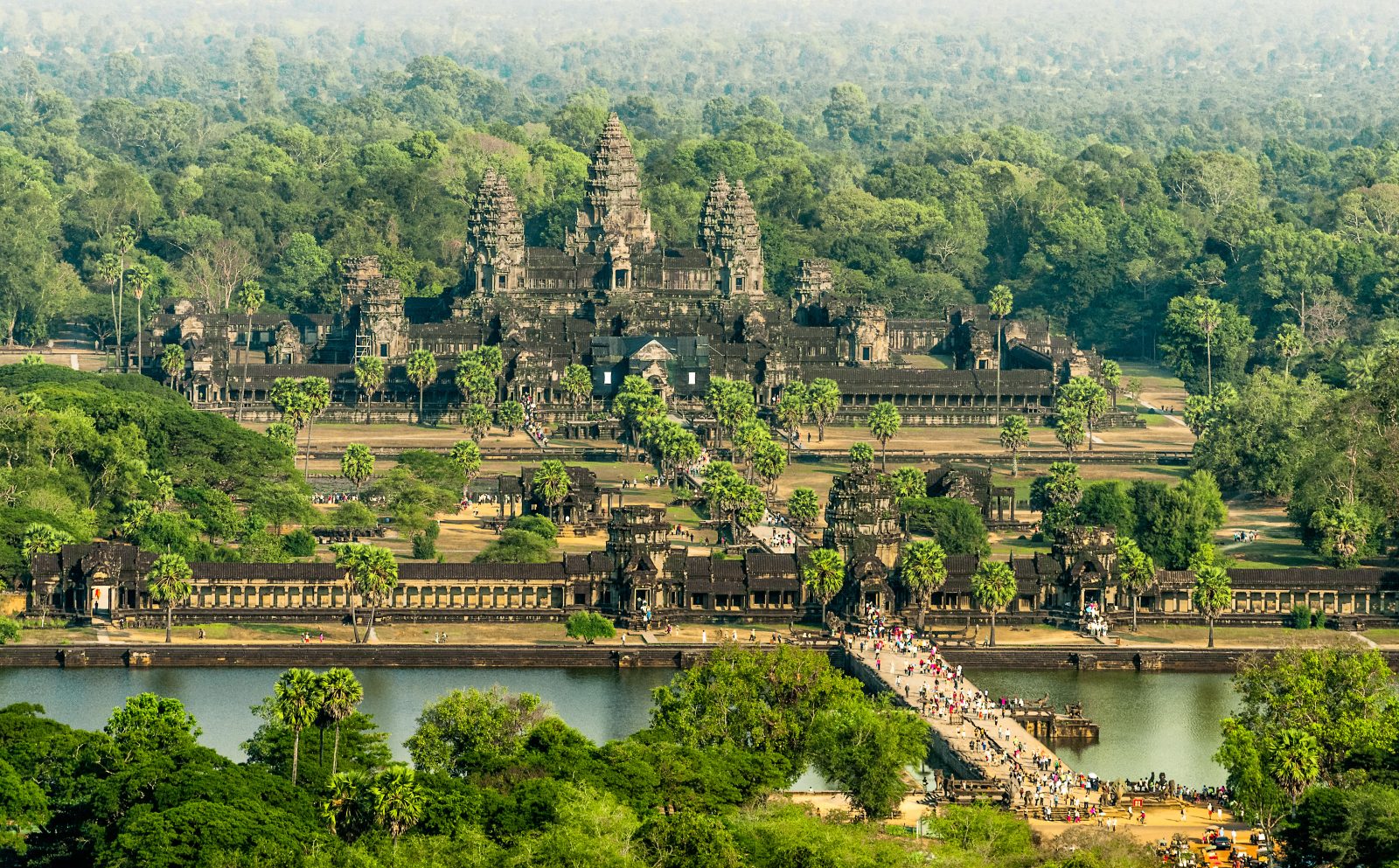
Preah Khan, Angkor
Preah Khan - the sacred sword - was built by Jayavarman VII in 1191 on the site of a battle against the Chams, and served as a monastery, a city and a university. Its founding inscription lists a population in the tens of thousands attached to the temple.
It is laid out as a long axis of galleries and courtyards running east to west, and walking it end to end passes through a sequence of doorways that narrow and lower as the centre approaches. Much of it is unrestored: collapsed lintels, trees growing out of the walls, corridors partly blocked. A curious two-storey building with round columns near the eastern entrance has no parallel anywhere else at Angkor and no agreed purpose.
Its size means it absorbs visitors, and it is often near-empty even when the main temples are busy. It lies just north of Angkor Thom.
- Angkor National Museum, Siem Reap — The museum that explains the Khmer empire, best visited before the temples rather than after.
- Angkor Wat, Siem Reap — The largest religious monument in the world, built in the twelfth century and never abandoned since.
- Banteay Srei, Siem Reap — A small tenth-century temple in pink sandstone, carved more finely than anything else at Angkor.
- Ta Prohm, Angkor — The temple left in the grip of the forest, where silk-cotton roots grow through the masonry.
- The Bayon, Angkor Thom — The temple of two hundred serene stone faces at the exact centre of the walled city of Angkor Thom.
- Kampong Phluk, Tonle Sap — A stilt village on the Tonle Sap where the houses stand six metres above the dry-season ground.